September

FiLiA Print 7

Throughout September I have been putting together work that I have made or am making, along with work created in or from the workshops. This work has become a collaboration, between my own practice and the creativity of the women that I have worked with.

The work I am using that comes from the women has all been given with consent to be used as part of the project. Some of the women can be credited in name, but all must bear some level of anonymity due to personal circumstances.

For this reason and many others I have felt from the start of the project that it is imperative that the work be seen by the women who have been involved. I intend to do this in several ways.

Firstly, I have ensured access (and funds) for those who are able and who want to, to come to the FiLiA conference to see the work and participate in the conference.

Secondly, I plan to produce two further organised exhibitions of the work. One in Aldershot and one (which may take a while to organise) in the prison in which we worked.

My work has to involve dialogue, and it has to (for me) create a cycle. The dialogue initiates the work, the work creates dialogue which in turn feeds back into my practice…. a cycle. This includes ensuring the work is shown in a variety of places and spaces, with a variety of audiences and views.

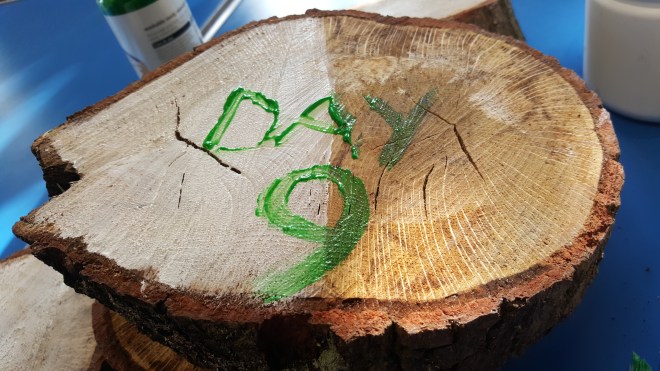
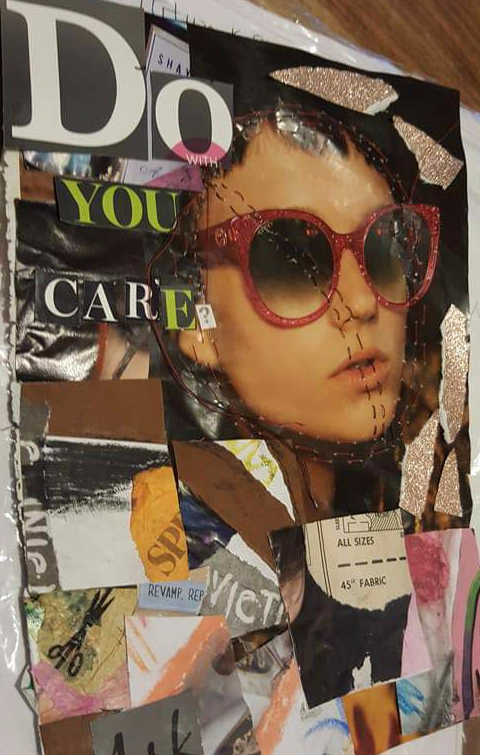
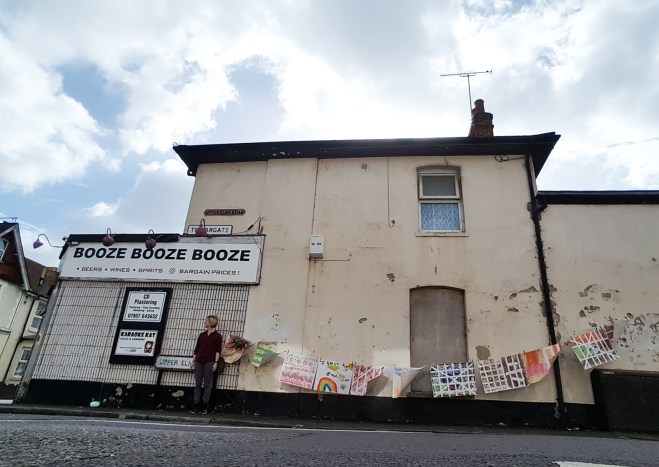
I decided this week to combine my interest in ‘place’ of exhibition, with my interest in the different ways I can combine the physical ‘pieces’ created in the workshops, with my own performative practice. I decided to run three very short, impromptu exhibitions in Aldershot. I set up work in three spaces, uninvited. There was not a planned audience. There was barely an uninvited audience, just a few shoppers, passers by and some refuse collectors. A security guard came to look at one point, but even he couldn’t be bothered to walk down to where I was to say anything. about me blocking access.

FiLiA Poss 5

Does an audience need to be invited?

Do we need to be given permission to access something or to engage with something?

Possibly.

Does work need an audience for it to develop for an artist? Do we need that validation? Is that what social media has become? Our audience? Our proof that something happened, even if only in pictures?

These are questions to consider for my practice going forward, but for now I DO feel it important that the collaborators in this project, the women involved should have the opportunity of seeing what I have done with their work, where it will be and how important this project has been for my own practice. It has not been a ‘selfless’ gesture of good will. It has been a process that has given me a huge amount of joy, emotion, education and space. It has formed the basis of a whole new path for my Art practice and for all of that I am incredibly grateful and excited.

Here’s to many more conversations. But next, I need to finish preparing the work for another place of conversation! The FiLiA conference 2017!!!

Look out for my work there which will include four projected video works, a moving archival installation (me!), some photographs and plenty of banners!
New Beginnings – Woking

September saw a flurry of activity for the project, but this time with regard to my own artistic responses to the past nine months.20170912_192437


It began however with a wonderful invite to the New Beginnings exhibition at The Lightbox Gallery in Woking. This exhibition is an annual competition set up by Women In Prison and Lightbox for women in prisons all across Surrey.  Some of the work that was made or initiated during the statements in semaphore workshops was entered into the exhibition and shown at the gallery.

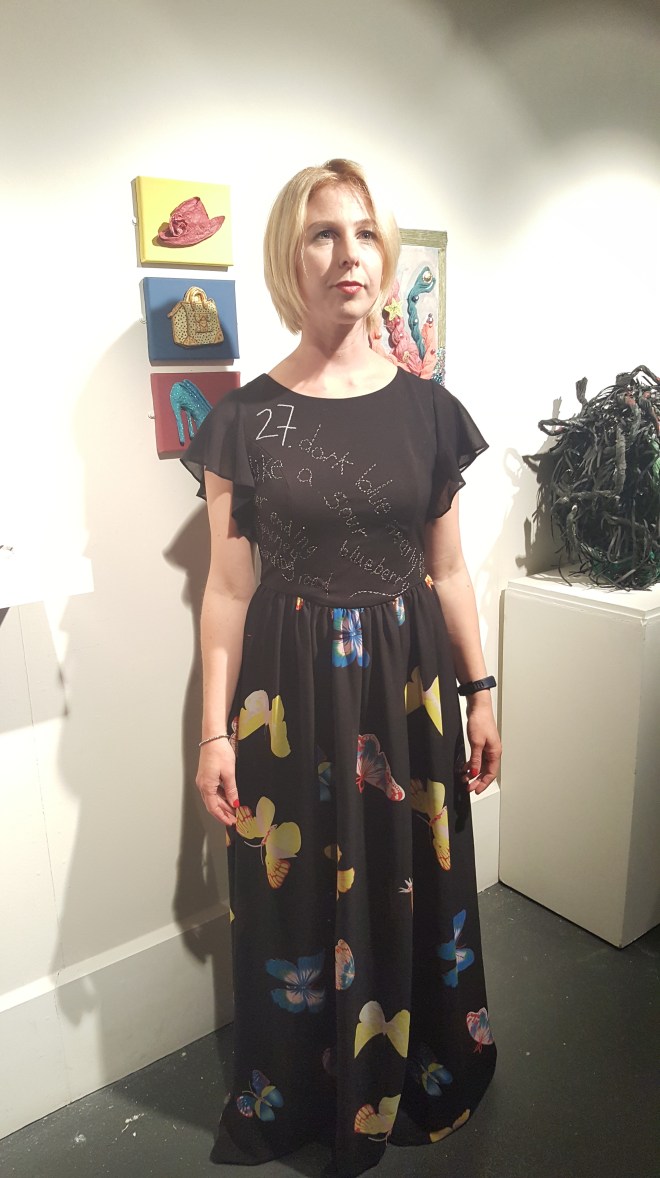
Some of the work exhibited was written poetry, again some of which was created during our workshops. One poem inspired by Leah’s creative idea of using an ‘age’ as a starting point was that of a woman called Charlotte. Her poem titled 27 was incredibly powerful. During the workshops we discussed different ways of showing poetry, through spoken word, or perhaps (due to limitations when in prison) through embroidery on clothing. After this discussion I found a dress that I thought would work really well with this particular poem. Throughout the sessions the symbol of the butterfly had come up again and again and this dress was covered in them!

For the New beginnings exhibition I asked the wonderful Cate Field if she would embroider some of Charlotte’s poem onto the dress. Unfortunately the gallery were unable to show the dress, so instead I wore it to the Private View and gave the poem it’s debut for Charlotte.

There is something strange about having work on display when you know that there are many of the artists themselves unable to be there. I think there is always the risk of it feeling like the work has been ‘taken’ away.  At the New Beginnings exhibition many of the artists were present and available to collect prizes, and there was also a fantastic monologue written by Nina Lemon and performed by Sophie Maher during the evening. Soooooo much creativity!

The idea of work being ‘taken’ from people is something that has pulled at me before and during this project and one that I will consider in the next post……

August Recap

20170712_180534

Today I am finally getting around to updating the blog and letting you know what has been happening (if you haven’t been following on FB).

July and August saw the final workshops with both the You Trust Hampshire and from Women In Prison.

The workshops, for me, were incredible. We ran twelve in total, six with each organisation.

My expectations had been to have safe spaces which would allow for a little creativity and hopefully some dialogue if it came naturally.

This was surpassed incredibly.

Every single workshop was full of women who were so engaged with us. They couldn’t get enough of the creative space, the creative chat and the time to just ‘be’.  These spaces were not spaced where women were invited to share, disclose or heal. They were not spaces offering therapy of any kind. They were simply spaces to be of use to the women in whatever way they needed that day.

Some of the sessions led to sharing, including from us artists. Some of them led to a lot of laughter. Many of them led to conversations around menstruation, bodies, love and feminism, varied perspectives and views, some heated debate but always lots of respect.

Ending the workshops felt like a rift. We had started something that was then stopping, when there was so much more to come from them. I will definitely be continuing conversations with Women in Prison and The You Trust with regard to further collaboration in the future.

An Artist’s Experience – Leah Thorn

An Artist’s Experience – Rebecca Harris

Susan Merrick Photo FiLiA 2
Image ©Susan Merrick

I first came across Susan Merrick’s work when my daughter suggested I applied for the open call as part of the artist’s latest Art Council supported project ‘Statements in Semaphore’.  Susan is artist in residence for FiLiA 2017 and is working on delivering, as well as myself and other artists, workshops to women in various settings including prisons and  women’s refuge centres.  In response to these workshops Susan aims to create a body of work which is commentary from the dialogue created with these women and the artists involved.

FiLiA, the organisation Susan is working with, stated last year that ‘Art has a unique ability to communicate the diversity of women’s experiences, and to engage the public with feminism in an accessible way.’ My arts practice is predominantly textile based and I see it as a comforting, accessible and familiar medium to broach and open up subjects to an audience.  There is a cultural, physical and visceral dialogue with the viewer and my themes of the human body are often concerned with feminist views of how women are treated and seen within the world.  I believe this is where both myself and Susan became excited about working together.  

For my part in the project I am in the process of delivering three workshops at a Women’s prison near London which is supported by ‘Women in Prison’ charity. Only as a child visiting my father in the Dickensian prison of Dartmoor, I have never visited a prison as such.  Leading up to my first day I had no idea what to expect, of course I had some nerves concerning the reception I might receive especially after a recent bad experience of teaching local teenagers where I am based in Exeter.  I am from Cornwall with little cultural diversity and experience of the world, moving to Exeter is slowly adapting me to the 21st Century but I still possess that backwards view of London being a scary place and women in prison must be even scarier.  Well they are not.

Upon arriving at the prison I was greeted by what you would expect, high fences, razor wire and lots of gates.  That sense of enclosure was strong, as you passed through each gate becoming further and further removed from the outside world.  Also, you were not allowed your phones and felt very isolated from that world these women are no longer allowed to be part of.  For myself this was just a temporary part of my day, for these women, reality.  A further frustration of not having my phone was not being to take photographs (cameras aren’t allowed either), as an artist entering that space there is such a wonderful array of photographic opportunities on offer you just had to glimpse and remember in your mind.

Driven a great deal of miles and needing to pass through London’s longest car-park/forcefield known as the M25, I was late.  Eventually arriving I was welcomed by big smiling faces who were getting the tables very messy with paint.  You don’t have to a psychologists to read this experience, they were feeling liberated, as much as prison would allow them of course.  Of which, I was struck that they constantly referred to myself, Susan and Claire from ‘Women in Prison’ as ‘miss’.  They were nervous of calling us by our names written on the address labels we all attached to our chests.  It became more relaxed as the day went on but was testament to the prison system treating them like naughty children.  

When planning the workshop, we were asked to get them to consider the art competition ‘Women in Prison’ are running with the theme – ‘Which Way’.  My approach was to consider which way we see ourselves in terms of body image, self-esteem etc.  I believe that some courses, twists and turns we make in life are greatly influenced by what we think of ourselves and as physical beings in the world that starts by *that* ‘gaze’ of others.  To start we create a group collage, adding text and images from women’s magazines to create a large scale visual collection of how these women respond to this prompt.  During the making of the collage there are wonderful conversations about how they feel they look, ranging from total body confidence to acceptance of scars and how they feel about life outside of prison and the decisions moving forward.  To ensure there wasn’t too many clusters of individuality with the giant work, every five minutes the women are instructed to move around the piece.  It allowed a sense of group identity within the work and a loss of territorial stance on areas completed.

Susan Merrick Photo FiLiA
Image ©Susan Merrick

 Once finished the work is turned over, this is where random lines are cut all through its length and from these strips further cutting leaves the small fragments.  Turning them over like playing cards the women then select the pieces they can add to the tiny sketchbook provided.  This enabled them to return to their individual identity of aesthetic choices of selection and application.  On the two workshops I have so far completed it was clear they were totally absorbed in the process and enjoyed the whole day.  They communicated often how they need more art in prison and I was really touched with the feedback given, one in particular stating she almost forgot she was in prison.  Let’s not forget that these aren’t hardened criminals, they are just everyday women.

I am due to complete my final workshop next week and although I won’t miss that commute, I shall certainly miss the experience of meeting such lovely women with fascinating stories they share through the art that helps them do this.

http://www.rebecca-harris.com/

My mixed feelings of the term Patriarchy.

I’ve been considering how I feel about the word, idea and undeniable reality of Patriarchy for a while now, and I sway within mixed feelings.

When studying Sociology the word was a useful tool to describe the societal structure that we live within. But on a personal level I have on occasion found that it can be used to minimise responsibility of individual action.

To blame the Patriarchy for certain behaviour, can perhaps divert responsibility. But…. it exists. It is an abstract theorisation of the societies structure. But it exists.

At times it feels more appropriate to call it the misogynist and power hungry elements within our societies around the world. But it is more than that.

When I hear other feminists blaming Men for all the violence against women for example in the sex trade, I understand that this comes from statistics and evidence that shows the main perpetrators are men. But there are also female perpetrators of violence and male victims of violence, across the globe. I don’t want my son growing up believing he is bad and violent because he is male. I don’t want my daughter to be fearful of all men and feel herself as a vulnerable victim. What I want is for them to understand the structures that exist. And to try and find their own paths through this.

Violence happens both for individual and circumstance related reasons …. but they also happen because of the societal structures, social norms and behaviours that are persistent. They also happen because of the legal systems that allow or sanction such behaviour.  While we have laws and legal language (or lack of them), alongside media and education that perpetuates views and behaviours that place men and women in differenct social and economic positions then the Patriarchy persists.

When I hear day in day out that my son behaves a certain way because he is a boy, or that my daughter behaves a certain way because she is a girl I get infuriated. I hear it from parents and teachers.  I know there are biological differences between men and women – moat of which develop after childhood by the way. But that doesn’t affect what we are interested in, what type of job we may want to have, how we want to (or feel we should) establish relationships or how we want to parent …. those elements comes from socialisation, both macro and micro.

The reason I wanted to consider this now is that as an Artist working within the realm of feminism I need to explore my own views. I need to unpick where I have issues with the language used and how I can move forward with these. IF I truly want to consider feminism and contemporary views within my art practice then I must acknowledge my own views, bias, limits and challenges as well as passions.


Ref:

Epistemic justice as a condition of political freedom?

M Fricker – Synthese, 2013 – Springer
Mayer, C. (2017) Attack of the 50 foot Women Harper Collins

May Update

17991185_295059134262142_4500768569035123639_n.jpg
©Susan Merrick

May has seen the first series of workshops get started and also the second and third series booked!

We will be running 6 evening workshops with the You Trust across May, June and July. These will be led by Cate Field and Amy Dignam.

Through June Rebecca Harris will be leading three days of workshops focusing on visual and tactile art with Women In Prison.

During June, July and August we will be running three days of workshops with Women in Prison, led by Leah Thorn and focusing on Spoken and Written word.

On beginning this project I had no idea how much time the organisation of it would take. I had not quite accounted for the necessary to-ing and fro-ing that needs to occur when you are coordinating several artists, venues, organisations and groups of participants. It is so exciting to now be at the point of delivery and dialogue.

This process has certainly not been wasted with regard to my practice either. Every phonecall, email or meeting with the artists, venues or organisations has led to new areas of thought. Issues of artist work and funding; artist work and limitations or liberation of space and time; considerations of anonymity versus documentation and how to work with this; safety of participants and artists; ethical considerations; practical considerations like children being present; visual or aesthetic and audio explorations and so much more. In 2017 this type of practice is not new, and it is also very common. So how do artists record it? Do they? Is it important to share documentation of this practice? I believe it is. So I am going to explore different ways that I can document this work and also investigate how others have also done so.

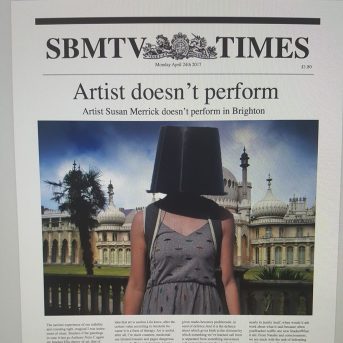
Image: Merrick S, ‘Artist Doesn’t Perform’, 2017

Guest Post: Cate Field

Creativity, Fear and Humiliation

Brené Brown once asked Kevin Surace, the then CEO of Serious Materials, and Inc. magazine’s 2009 Entrepreneur of the Year, this question: What’s the most significant barrier to creativity and innovation?

Kevin thought about it for a minute and said, “I don’t know if it has a name, but honestly, it’s the fear of introducing an idea and being ridiculed, laughed at, and belittled…”.

I’ve recently been working with some quite amazing people. (All are classed as being ‘vulnerable’ in some way. This has got me thinking about labels (again), and how the work vulnerable makes others feel, and how those labeled vulnerable feel about it. … I’ll write about this next time.. off on another tangent). Yesterday I worked with a small group of women and their children who had been subjected to domestic violence so extreme that they were living together in a secret refuge. The workshop is part of a series organised by Susan Merrick, the artist in residence for FiLia, and we were exploring creativity through playing with materials – paint, ink, tissue paper and glue. Susan is interested in the conversations that come forth in these gentle, arty sessions, and I am interested in how creativity finds its way out in the darkest of times.

Every single session, class, workshop I have ever done has begun with two or more (sometimes lots more) people telling me that they’re rubbish at art, they can’t draw, they hated art at school, they were ridiculed, humiliated and shamed about the art they produced and that they were only here because it might be fun and someone said there was cake. EVERY SINGLE ONE. Without exception. Even my first year A Level Art & Design class had a few students telling me that actually they were crap… yeh, right… I interviewed you remember? What is going on here? Why do so many people think like this? I think it fear plays a big part. We are afraid to make mistakes, to look stupid. Everyone around is us is just so much better than us. It’s crazy. I start most classes and workshops with a little exercise called ‘Playing with Stuff’ *. I put cheap paper out on the tables – wallpaper, newsprint are good – and sticks, twigs, masking tape, cardboard and poster paint. The rules are: there are no rules. People are encouraged to make tools from the sticks and tape, and to make marks on the paper. Every mark is the ‘right’ mark. Every splodge, smudge and drip are perfect. From tentative dabs come confident sweeping wavs of paint across the paper. There’s a few little giggles at first and then loud bursts of laughter. The energy in these sessions is fabulous. I encourage people to show their work – maybe to the person next to them, and maybe to the group. Often I will hold up a piece and explain just what makes it so wonderful. Others join in, and suddenly people are talking. Talking about your artwork and how fabulous the colours are, or how much they like the patterns and the way you used the tools, and how did you create that bit because it’s beautiful?

If you’re a manager and you want your staff to come up with ideas, you are responsible for making sure that the environment you create is one in which those ideas can be expressed without fear. If you’re a head teacher, or senior person in an academic institution, are you creating an environment where your staff can play with ideas and concepts? Or are you too wound up in protocol to see the depths of despair?

We know now that children need to play in order for them to develop into fully functioning humans. I think we all need to play without fear.

* I wrote this in a lesson plan once. Some people have no sense of humour!

Cate Field is one of the Artists working on Statements in Semaphore and is one of the workshop leaders. This article was first published by Cate on LinkedIn May 11th 2017.

catefield.com

Artist Call Out and Recruitment!

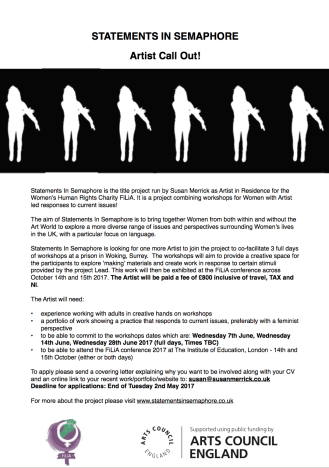
In April Janet Pavone unfortunately had to pull out of working with the project, so I decided to turn this into an opportunity! I created a call out for the project to recruit an artist to run 3 of the workshop day with the group Women In Prison.

Call out!

This was a great thing to do, not only did it give our project some fantastic exposure (always silver linings) it also provided me with an opportunity to get in contact with a wonderfully wide ranging selection of Artists. After a wonderful response to the call out in the short time that it was open I considered the applications and selected Rebecca Harris to be our third artist. With a wealth of both workshop and professional practice experience and a keen focus on using materials to create dialogue Rebecca is a perfect fit. I’m very excited to see what happens on the workshops!

For more about Rebecca please see her website here: http://www.rebecca-harris.com/

An added bonus during this process was also securing Amy Dignam of Desperate Artwives to come on board with Cate Field and myself for two of the workshops with The You Trust. Amy is a visual Artist with a passion for working with women and mother artists to create opportunities for practice, exhibition and performance.

The Desperate Artwives website is currently being updated but I will post it here soon!

18222144_302476166853772_8738670795960257140_n

WORKSHOPS!!


Over the past few months I have been working on the organisational side of the project and this month we finally started the first series of workshops with a group of Women from You trust in Hampshire.

I have several personal aims for this project. I want to bring female artists and women who do not call themselves artists together to allow discussion and dialogue to occur. I want to consider the limitations and liberation of working within an art world and art institutions vs outside of this, or doing both. I want to use these situations of dialogue as my research, but also give back by providing creative space and professional artist guidance for these groups of women to create themselves and exhibit work.

This project came about from my desire to consider current issues of gender and equality within a wider context, and within a context that encompasses the communities that I am a part of and live within. Alongside seeking discussion within the academic and activist circles that I am a part of, I felt it necessary to consider views that grow outside of these arenas. For this I needed to set up my own scenarios for discussion and working with FiLia to run this project felt like the best way to do this.

So far we have 3 artists, 3 groups of women, two venues including Downview Prison and two exhibition opportunities in London and locally. We ran the first two workshops in May and these allowed me to start to explore how as a group we can gain each others trust, feel relaxed and possibly document the events in some way. Having another Artist lead the sessions has worked well with this as it allowed me to be free to roam the workshop, join in and speak to the women. I was also able to photograph and film, but with the limitations of anonymity that is essential with this particular group.

Dialogue in the group has already begun, women teasing one another, but also supporting one another almost like family. There is presence of a support worker to consider, getting involved with the project which lends a feel of supervision, but also of security perhaps for the women. These sessions also have children present, an essential element when facilitating a group women with no local family support. This allows for the women to be relaxed knowing that their children are present, safe and occupied (with their own creative activities and play), but it also  can be a distraction. A well known consideration for parents!

How much dialogue on current issues will occur naturally, I don’t know. I could lead it perhaps, but I don’t want to disrupt what comes naturally either. Is it important ‘what’ we talk about? Or is that simply my assumptions of current issues and what may be important?